Interesting questions
Lexicography
Why isn’t “boiling water” in the dictionary?
Maybe it is, now — but lexicographers long treated transparent phrases as self-evident and saved their ink for the opaque ones like “hot dog.” Hundreds of thousands of everyday phrases never made the page.
Inside A slider through the phrases at every familiarity level — the gold ones never made any dictionary.
Semantics
What’s the opposite of “mother”?
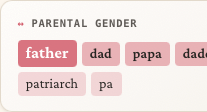
Father, by gender. Child, by generation. Neglect, by nurturing. Most words oppose along several axes at once — we mapped the axes across the whole vocabulary, plus 163K pairs of opposing topics.
Iconography
Which words can you draw?
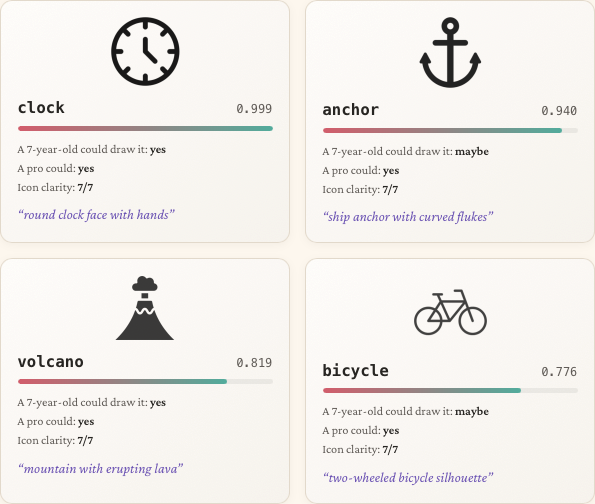
Anchor, instantly. Gravity, via a falling apple. Nonetheless — there’s nothing to draw. We scored 599K words for how well each becomes an icon, and half of familiar English flunks.
Vocabulary
Which words carry the meaning?
Set a vocabulary size and watch real passages — Peter Rabbit, the Gettysburg Address, a biotech abstract — fade to just the words you’d know. A picture book survives on a few thousand; scholarly prose is half ghost. Then flip it: hide the common words and see each passage’s skeleton.
Artificial Intelligence
Why can’t you just ask an LLM?
Ask for words related to “key” and you get the dominant sense — lock, door, password — never reef, cay, or clef. LLMs lean on the over-common words, miss the gestalt links (crisis → siren), and answer one prompt at a time — blind to the millions of cross-references that keep the whole map consistent.
The Count
How many words are in English?
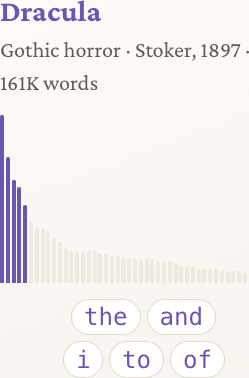
Nobody actually knows — count every inflection, name, and technical term and it runs past two million. A fluent adult knows maybe 20–40 thousand base words — and only if “explodes” and “explosives” count as one. So we stopped counting and started ranking by familiarity.
Copyright
Why isn’t the best language data on GitHub?
Facts can’t be copyrighted — so the best curated language data is too costly to build and too easy to copy to ever publish. The good stuff stays private. (So we released ours.)
Puzzle Craft
How do you keep every level fresh and fair?
Every word fits a dozen categories, and by level 400 you can’t hold the whole grid in your head. The fix isn’t talent — it’s letting an algorithm over the network carry the bookkeeping, so you can focus on the craft.
Puzzle Vocabulary
What is a confound?
One ordinary word in two topics at once — that’s a confound, the ambiguity every word puzzle has to resolve or trip over. Inside: the confound, plus its sharper cousins — red herring, distractor, and natick — each with a real example from the data.
Labor
How long does it take to make one good puzzle?
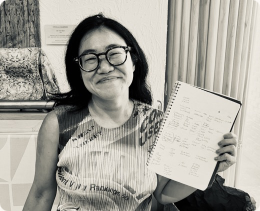
A toy 2×2 takes seconds. The 4×4s millions play take Wyna Liu about two hours each, seven a week, from a spiral notebook — and the big boards take days. Inside: the ceiling every word game hits, and the 1949 rule for playing fair.
Mathematics
How many puzzles before they repeat?
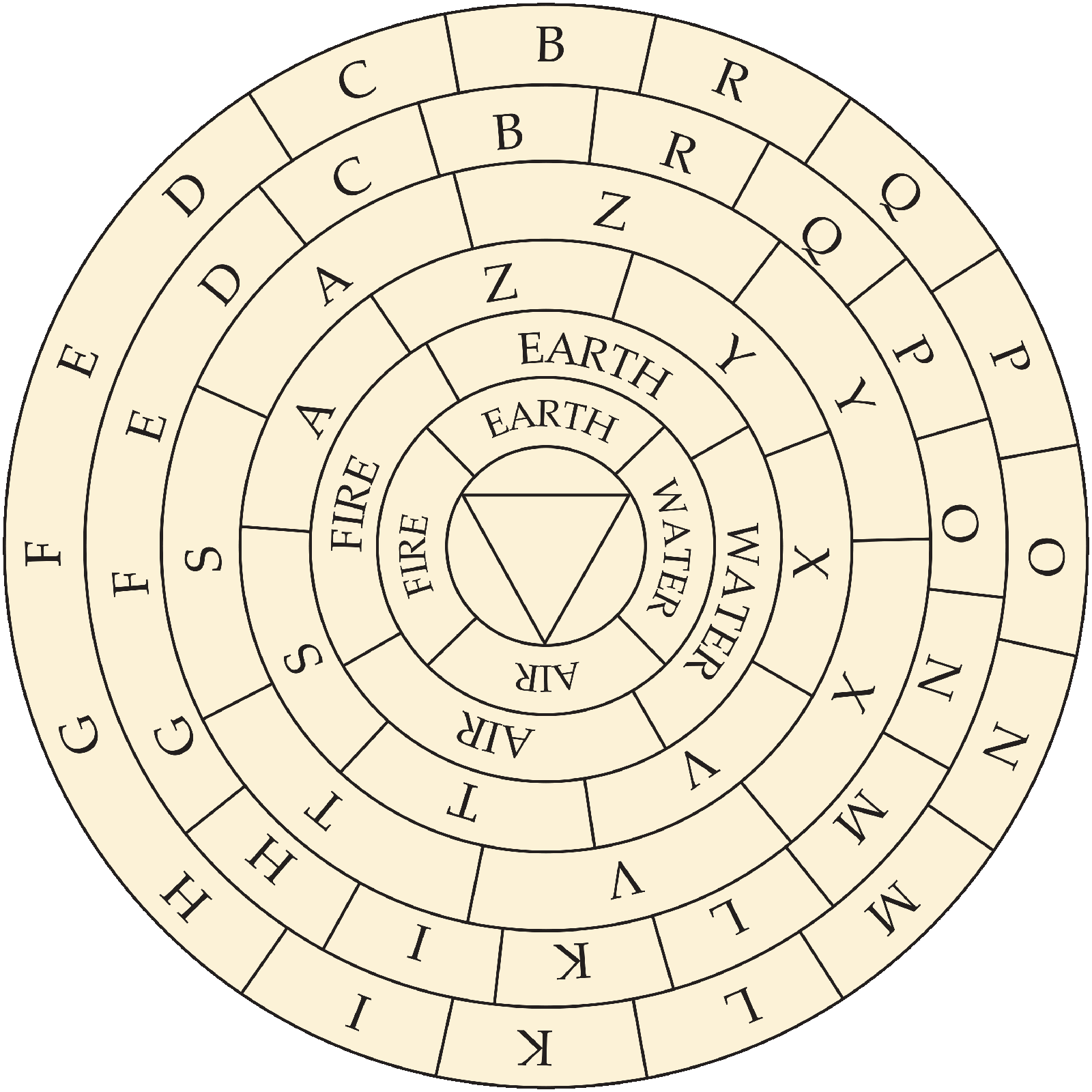
A few thousand topics, ten to a board: hundreds of millions of puzzles before any three topics recur. The combinatorics are wilder than they look.
Network Science
How far apart are any two words?
We measured a million random pairs; 76% connect in seven hops or fewer. Fire, ember, memory, recall, cancel — every step makes sense, which is why you can feel your way across the whole language.
The Field
What other sources of semantic data are out there?
WordNet, Wiktionary, ConceptNet, SCOWL, Datamuse — the free landscape is a dozen resources that each solve one narrow piece. We walked the whole field: what each one gives you, and exactly where it stops.
Call for Articles
Write the next one.
Use Linguabase data to extract new stories and analysis of English, and we’d be happy to share your work with our readers. Send us what you find — if we like it, it runs here, with your byline.